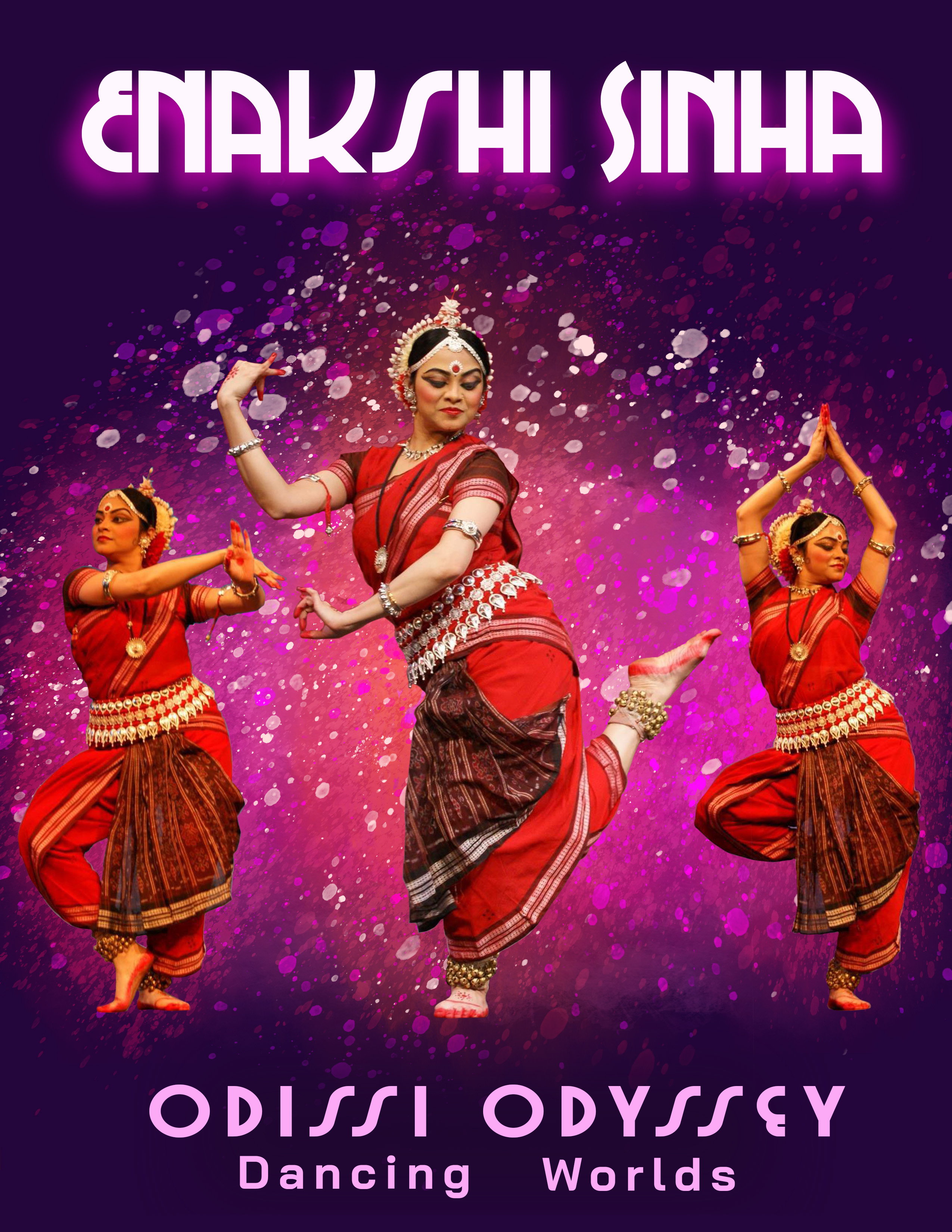
Odissi Odyssey Young Scholars Review
Odissi Odyssey Young Scholars Review
Student Publication and Editorial Handbook
K 12 Honors Study Circle
Founder and Faculty Director Dr Kaustavi Sarkar
Welcome
The Odissi Odyssey Young Scholars Review is a supervised publication program for K–12 students studying dance, music, theatre, culture, history, and performance. The Review gives students genuine experience proposing ideas, conducting research, interviewing artists, receiving editorial feedback, revising their work, and publishing for a public audience. Publication is earned through inquiry, care, documentation, and revision.
This handbook explains what you will create, how the editorial process works, how to research responsibly, and how to protect the dignity and privacy of the people represented in your work. Read it before submitting a proposal and return to the checklists during every stage of your project.
Our Purpose- Develop informed young writers, researchers, reviewers, interviewers, and documentarians.
- Connect K–12 inquiry with the artists and scholarship presented through the Odissi Odyssey Conference.
- Create a public record of student learning in South Asian dance and related artistic practices.
- Teach students to communicate across differences in age, training, culture, language, ability, and perspective.
- Build a pathway from guided reflection to independent research and publication.
A published article carries your name and enters a shared cultural record. You are responsible for the accuracy of your claims, the fairness of your interpretation, the clarity of your writing, and the proper acknowledgment of every source and collaborator. Editors may request substantial revision. Acceptance into the Study Circle does not guarantee publication; completing the editorial process does.
Learning OutcomesBy completing a publication cycle, you should be able to:
- Form a focused question and explain why it matters.
- Locate, evaluate, document, and cite credible sources.
- Distinguish observation, interpretation, evidence, and opinion.
- Describe movement, music, performance, and cultural context precisely.
- Interview artists respectfully and represent their words accurately.
- Give and receive specific, constructive editorial feedback.
- Revise for argument, evidence, organization, style, and correctness.
- Publish ethically while respecting consent, privacy, copyright, and cultural context.
Level
Typical length
Suggested publication
Research expectation
Emerging Scholar Grades 6 to 8
300 to 500 words
Reflection, artist profile, concept explanation, or conference postcard
One guiding question; two credible sources; clear observation and reflection
Developing Scholar Grades 9 to 10
600 to 900 words
Performance review, interview, comparative essay, or research note
Focused claim; three or more credible sources; quotations or examples; bibliography
Advanced Scholar Grades 11 to 12
1000 to 1500 words
Research article, critical review, multimedia essay, or conference report
Independent question; source evaluation; sustained analysis; formal citations; revision record
Editorial Fellow By invitation
Varies
Peer editing, fact checking, issue introduction, or conference correspondence
Editorial reliability; respectful feedback; deadline management; accurate documentation
Types of Work We Publish
Performance Review A supported interpretation of a live or recorded performance. Describe specific artistic choices before evaluating their effect.
Artist Interview An edited conversation based on prepared questions, informed follow-up, accurate transcription, and the interviewee’s publication consent.
Research Article An evidence-based investigation organized around a focused question or claim.
Research Note A concise explanation of a concept such as rasa, bhava, tala, gesture, costume, mythology, lineage, choreography, or technology.
Conference Report Documentation and analysis of panels, performances, workshops, and recurring ideas across an Odissi Odyssey gathering.
Multimedia Essay Writing combined with authorized photographs, diagrams, audio, or video that adds meaning rather than decoration.
The Publication CycleStage
Student action
Editorial outcome
1 Orientation
Read this handbook; review models; discuss consent, evidence, and audience.
Shared expectations and publication agreement
2 Pitch
Submit a question, format, audience, preliminary sources, and realistic plan.
Approved, revised, or redirected proposal
3 Research
Gather notes, observations, interviews, and source records.
Research dossier and source check
4 Draft
Write a complete first draft using the assigned format.
Developmental feedback on focus, evidence, and structure
5 Peer Review
Respond to another student’s work using the review protocol.
Specific feedback and editorial citizenship
6 Revision
Submit a revised draft and explain major changes.
Faculty editorial review
7 Copyedit
Correct citations, names, captions, links, grammar, and formatting.
Publication-ready manuscript
8 Approval
Confirm author bio, permissions, media, and final proof.
Scheduled website publication
9 Reflection
Document what changed and what you learned.
Portfolio artifact and future goal
Suggested Ten Week Schedule
Week
Milestone
Evidence due
1
Orientation and model analysis
Signed agreement and reading notes
2
Pitch development
Proposal form
3
Research planning
Question, source list, interview request if needed
4
Evidence gathering
Research dossier
5
Outline and opening
Working structure and sample paragraph
6
Complete draft
Draft one
7
Peer review
Review form and author response
8
Substantive revision
Draft two and revision memo
9
Copyedit and permissions
Final text, citations, media permissions, bio
10
Proof and publication
Approved proof and reflection
Student Editorial Roles
- Author Develops and revises the work; verifies every claim and credit.
- Peer Reviewer Identifies strengths, questions, evidence needs, and revision priorities.
- Fact Checker Confirms names, titles, dates, quotations, translations, links, and citations.
- Copyeditor Improves clarity and correctness without replacing the author’s voice.
- Interviewer Researches the guest, prepares questions, secures consent, and checks quotations.
- Documentarian Produces authorized photographs, captions, notes, or recordings.
- Issue Editor Coordinates an approved group of articles and writes a short introduction.
Strong publication begins with a question that can be investigated. A topic is broad; a question creates direction. Instead of asking only about Odissi costume, ask how costume contributes to character, rhythm, visibility, or cultural meaning in a specific performance.
Source EvaluationBefore using a source, ask who created it, when and why it was created, what evidence it provides, what perspective it represents, and what may be missing. Whenever possible, combine different kinds of evidence.
- Primary sources Performances, interviews, field notes, programs, photographs, archival documents, and the artist’s own statements.
- Scholarly sources Peer-reviewed articles, academic books, chapters, and reputable reference works.
- Contextual sources Museum, university, library, cultural institution, or established journalism websites.
- Use cautiously Promotional biographies, anonymous webpages, social posts, unsourced videos, commercial summaries, and AI-generated text.
- Record the author, title, publication, date, page number, and stable link when you first use a source.
- Place exact words in quotation marks and cite them. Paraphrasing still requires a citation.
- Never invent a quotation, translation, citation, date, or performance detail.
- Credit choreographers, performers, musicians, teachers, translators, photographers, videographers, designers, and cultural sources.
- Use the citation style assigned by the editor and apply it consistently.
Observation State what you saw or heard: timing, gesture, spatial pattern, rhythm, relationship, design, or audience response.
Interpretation Explain what that evidence may mean. Use language such as suggests, emphasizes, complicates, or contrasts when making an interpretive claim.
Evaluation Support judgments with examples and criteria. Avoid praise or criticism that rests only on preference.
Interview Ethics- Request the interview through an approved adult contact and explain the student publication.
- Do not record without explicit permission.
- Ask open, informed questions; avoid questions about private matters unless the interviewee invites them.
- Transcribe quotations accurately and never alter a speaker’s meaning.
- Give the interviewee an opportunity to verify direct quotations and factual information.
- Do not promise publication or editorial control beyond the agreed quotation check.
Assume your reader is interested but may not know the vocabulary, history, language, or artistic conventions you know. Define specialized terms at first use, translate non-English words when appropriate, and provide enough context to understand why the subject matters.
A Strong Article- Begins with a focused question, observation, scene, or claim.
- Uses paragraphs with clear purposes and logical transitions.
- Supports interpretation with specific evidence.
- Represents artists, traditions, and disagreements fairly.
- Acknowledges uncertainty and avoids speaking for an entire culture or community.
- Ends by explaining what the inquiry helps readers understand.
Prefer
Avoid
Specific description of movement, sound, space, and relationship
Beautiful, amazing, exotic, authentic, pure, or timeless without explanation
This performance suggests or this source argues
Everyone believes or Indian culture says
The evidence available to me indicates
Unsupported certainty
A named tradition, region, artist, lineage, or community
Treating South Asia as one uniform culture
Respectful disagreement supported by evidence
Personal attacks, ridicule, or dismissive comparison
Revision Expectations
Revision is not punishment and it is not limited to proofreading. Authors may need to change the question, reorganize the article, gather new evidence, remove unsupported claims, rewrite an opening, or clarify cultural context. Submit a revision memo identifying the three most important changes and what each change improved.
Use of Artificial IntelligenceAI may support learning only when the faculty editor permits it. You remain responsible for every word, claim, citation, translation, and creative decision submitted under your name.
- Permitted with disclosure when assigned Brainstorming questions, generating search terms, checking organization, or receiving grammar suggestions.
- Not permitted Submitting AI-generated prose as your own, fabricating sources or quotations, simulating an interview, or replacing required reading and observation.
- Required Verify outputs against reliable sources and include an AI-use note when any generative tool materially influenced the work.
South Asian dance contains many histories, languages, lineages, religions, regions, migrations, innovations, and debates. No student, artist, or source represents all of them. Responsible publication names the perspective being discussed and remains open to correction.
- Ask how caste, class, religion, gender, race, disability, migration, language, and access may shape participation and recognition.
- Do not describe cultural practices as strange, primitive, mystical, or unchanging.
- Distinguish respectful adaptation, intercultural exchange, appropriation, and misrepresentation through evidence rather than accusation alone.
- Credit teachers, communities, and knowledge traditions without treating lineage as proof that a claim cannot be questioned.
- When writing about conflict or harm, consult the faculty editor before publication and protect people who may be vulnerable.
Because the Review publishes K–12 work, student safety takes priority over publicity. Students do not independently manage public author accounts or contact adult contributors outside approved channels.
- A parent or guardian must approve publication for a minor.
- Photograph, video, audio, and interview permissions are separate from writing permission.
- Students may publish using a first name and last initial when appropriate.
- Do not publish a student’s personal email, phone number, home address, school schedule, travel details, or live location.
- Do not identify another minor without permission from that student and their parent or guardian.
- Public comments should remain disabled or moderated by authorized adults.
- Report uncomfortable communication, pressure, harassment, or safety concerns immediately to the faculty director or designated adult.
- Use only media you created, that the Review has permission to publish, or that is clearly licensed for reuse.
- A link to an image does not grant permission to republish it.
- Credit the creator and license in every caption.
- Do not upload complete performance recordings, music, books, articles, or choreography notation without authorization.
- Captions must identify the work, people shown, creator, date, location when appropriate, and permission source.
Component
Required information
Manuscript
Editable document; descriptive title; student name as approved; assigned word range; page numbers
Author biography
Approximately 50 words; grade or Scholar Circle; artistic and research interests; no private contact information
Sources
Consistent in-text citations or notes and a complete bibliography
Images and media
Separate high-quality files; captions; credits; alt text; written permission or license
Interviews
Consent record; recording permission if applicable; transcript or verified quotation notes
Revision record
Peer-review form, author response, and revision memo
Approvals
Student affirmation and parent or guardian publication consent
Naming Files
Use a clear pattern so editors can identify every version: LastName_FirstName_ShortTitle_Draft1. Media files should include the article title and a number matching the caption list.
Author Biography ModelAnika Rao is a Grade 10 member of the Odissi Odyssey Honors Study Circle. She studies Odissi and is interested in gesture, mythology, and the ways young artists document cultural knowledge. This is her first performance review for the Young Scholars Review.
Suggested Citation ModelRao, Anika. “Gesture and Memory in Contemporary Odissi.” Odissi Odyssey Young Scholars Review, 2027, [stable article link].
How Your Work Will Be EvaluatedCriterion
What editors look for
Weight
Question and Purpose
Focused inquiry; clear audience and significance
15 percent
Evidence and Research
Credible sources; accurate documentation; meaningful examples
25 percent
Analysis and Original Thinking
Reasoned interpretation; student voice; willingness to revise conclusions
20 percent
Cultural Responsibility
Context, specificity, attribution, fairness, and care
15 percent
Organization and Style
Coherent structure; precise language; readable prose
10 percent
Revision and Editorial Practice
Thoughtful response to feedback; fact checking; deadlines
10 percent
Publication Readiness
Correct citations, credits, permissions, biography, and formatting
5 percent
Student Pitch Form
Student name and approved publication name
________________________________________________________________________________
Grade and Scholar Circle
________________________________________________________________________________
Proposed title
________________________________________________________________________________
Publication type
________________________________________________________________________________
Central question
________________________________________________________________________________
Why this matters to Odissi Odyssey readers
________________________________________________________________________________
Primary evidence or performance
________________________________________________________________________________
Three preliminary sources
________________________________________________________________________________
People you hope to interview
________________________________________________________________________________
Media you hope to include
________________________________________________________________________________
Possible cultural or ethical concerns
________________________________________________________________________________
Ten week work plan
________________________________________________________________________________
Peer Review Form
Read the complete draft once before writing comments. Address the work, not the writer. Be specific, respectful, and useful.
The central question or claim I understand is
________________________________________________________________________________
________________________________________________________________________________
One passage that is especially effective and why
________________________________________________________________________________
________________________________________________________________________________
One place where I need more evidence or context
________________________________________________________________________________
________________________________________________________________________________
A cultural term, name, credit, or claim that should be verified
________________________________________________________________________________
________________________________________________________________________________
A paragraph or section that could be reorganized
________________________________________________________________________________
________________________________________________________________________________
A question that may help the author deepen the analysis
________________________________________________________________________________
________________________________________________________________________________
The most important next revision
________________________________________________________________________________
________________________________________________________________________________
Author ResponseIdentify the feedback you will use, the feedback you will not use, and your reason for each decision.
________________________________________________________________________________
________________________________________________________________________________
________________________________________________________________________________
Final Publication Checklist
- My title accurately represents the article.
- My opening establishes a question, scene, or claim.
- Every interpretation is supported by observation or a source.
- Every quotation is exact and cited.
- Names, titles, dates, spellings, translations, and links have been checked.
- Choreographers, performers, musicians, teachers, photographers, and other contributors are credited.
- I have explained specialized terms for a general reader.
- I have avoided stereotypes and claims that speak for an entire culture.
- All images and media have permission, credits, captions, and alt text.
- My author biography contains no private contact information.
- I completed peer review and submitted a revision memo.
- I reviewed the final proof and approved it for publication.
I affirm that this submission represents my own work; that I have acknowledged all sources, collaborators, and permitted uses of artificial intelligence; that I have not fabricated evidence; and that I understand publication depends on editorial approval. I agree to communicate respectfully, protect private information, correct errors, and participate in revision.
Student printed name
________________________________________________________________________________
Student signature and date
________________________________________________________________________________
Parent or guardian printed name
________________________________________________________________________________
Parent or guardian signature and date
________________________________________________________________________________
Faculty editor approval and date
________________________________________________________________________________